How to Pass a Volleyball
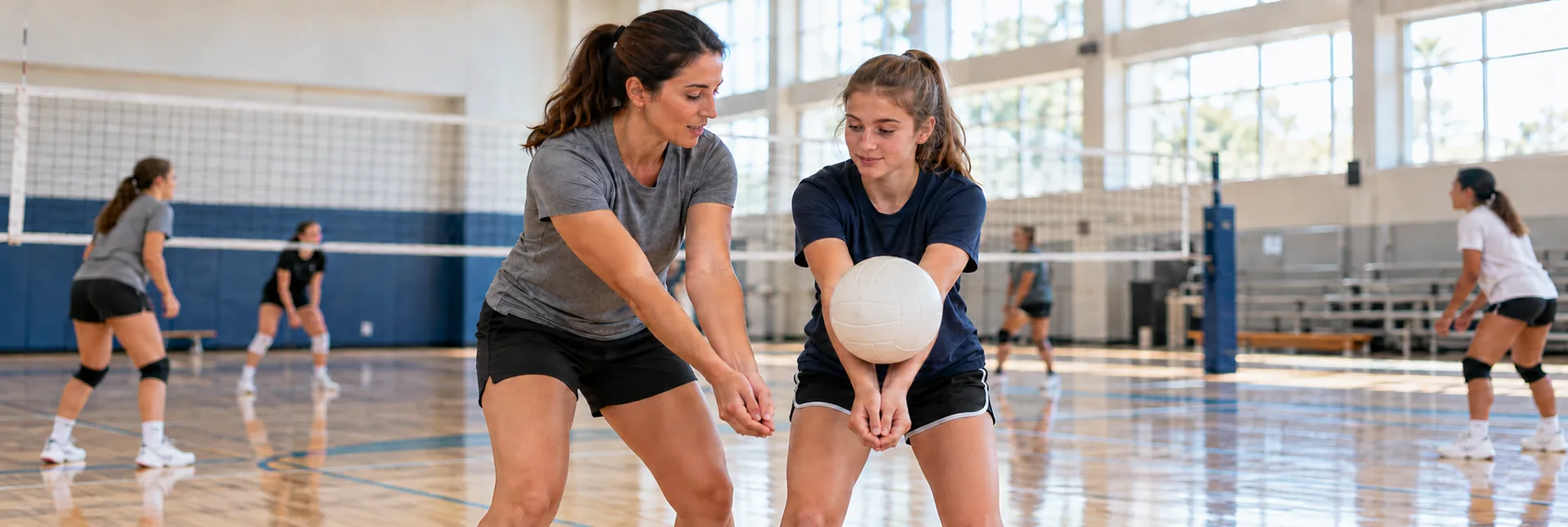
Build a flat platform, angle it to your target, move your feet first and read the server so you stop shanking serves.
Short, step-by-step answers to the questions new players ask most, like how to serve overhand or how to stop shanking passes. Each guide gives the key steps, the most common mistakes and how to fix them, and a simple practice plan. For what each skill is for, when to use it and the tactics behind it, see the skill guides.
Build a flat platform, angle it to your target, move your feet first and read the server so you stop shanking serves.
Get under the ball early, square up to your target and release with both hands together, plus what referees call a lift or a double.
A repeatable toss, float and topspin contact, the 8-second rule and how to avoid foot faults.
Time your approach, swing like a throw, hit high in front, choose smart shots and land safely without touching the net.
Better approach and block technique, a strength and plyometric progression, safe landings and realistic goals.
A safe floor-skill progression from kneeling to full extension, with knee pads, hand position and drills.
A 20–30 minute workout with just a ball and a wall: ball-control drills, bodyweight strength, landing practice and a 7-day plan.
Build a session around one goal. Choose activities, include transitions and water, then adjust the time. No account is needed; your entries stay in this browser.
Publish what you will observe, give every player repeated chances in comparable tasks, and write down what actually happened. Use the sheet to support a considered coaching decision.
Record the referees’ decisions, check the serving order and keep the record consistent with the scoreboard. Learn the workflow below before using your event’s official paper or electronic system.
Choose one question, record what you can actually see, and turn the pattern into a small practice task. Keep the observation definitions and the next check simple; a few match notes suggest a question, not a diagnosis.
Use these 12 sessions as a sequence of choices, not a promise to master volleyball in six weeks. Repeat a task when needed, simplify it when control breaks down, and fit the work into the team's existing schedule.
Use a timeout to communicate one clear next action, not to list every mistake. Confirm your competition's rules, decide what the team needs, and leave players ready for the next rally.
After an error, return attention to one action you can do in the next rally. A brief, practised routine can give that attention somewhere useful to go; it does not erase feelings or guarantee that the next ball succeeds.