This guide helps players, parents and coaches choose a volleyball, and the key decision is where you play. A standard indoor ball (size 5) is 65–67 cm around, weighs 260–280 g and is pumped harder than a beach ball, which weighs the same but is slightly bigger and much softer, so it floats in the wind. For practice, buy the same model your league plays with if you can; for players 12 and under, choose a full-size light ball.
Advertisement disclosure: This guide includes Amazon affiliate links. If you buy through them, we may earn a commission that helps support Learn Volley. As an Amazon Associate I earn from qualifying purchases. We have not personally tested these products; our comparisons use manufacturer information and published sources. Links open Amazon.com; Amazon may offer your local store, and price, stock and sizes can differ by store. How advertising and affiliate links work on Learn Volley.
Our picks with Amazon links are informed by product specifications, Amazon ratings and Amazon’s summaries of customer reviews. How we choose
Choose for the game you actually play. A ball's colour doesn't tell you what it's for, and two balls that look almost identical can have different model codes.
Mostly in a sports hall: start with the indoor picks, and check your league's ball rules in the official-ball tables before choosing a match ball.
A player 12 or under: check the coach's recommended ball weight and age-group rules before ordering a standard adult ball. The adult indoor picks are not automatic choices for juniors, so see the light balls first.
Both indoor and beach: use a separate ball for each. The two are pumped to different pressures, so follow the care and inflation steps for each one rather than assuming one setup suits both.
Next, ask your coach which ball the team uses. Practising with the same model makes sessions more familiar, but there's no need to buy a premium match ball just because you're starting, and your club may already provide balls for team sessions.
Indoor vs beach balls
Spec
Indoor
Beach
Circumference
65–67 cm
66–68 cm
Weight
260–280 g
260–280 g
Pressure
0.30–0.325 kg/cm²
0.175–0.225 kg/cm²
Build
Usually glued (laminated) panels
Usually stitched, water-resistant
Beach balls aren't lighter. They're the same weight, but bigger and softer. Don't use an indoor ball on sand or grass: it soaks up water and wears quickly.
Exact model: compare the code in the listing with the code your coach gave you.
Size and weight: make sure they suit the player and the competition.
Quantity: check whether the price is for one ball or a pack.
Inflation equipment: check what's included and whether you already have a pump and a gauge (see care and inflation).
When the ball arrives, follow the maker's inflation and care instructions, and keep your order details until you've checked the model you received. A low price doesn't help if it's the wrong version for your sessions.
Buying for a beginner? Our equipment checklist covers what to bring first and what can wait.
Which “official” ball does my league use?
Leagues and tournaments set the ball; check yours before buying. Outside the US, your national federation or league names its match ball; many use FIVB-approved models.
International
Competition
Official ball
FIVB indoor
Mikasa V200W
FIVB beach / Beach Pro Tour
Mikasa BV550C
In the US
Competition
Official ball
NCAA women's championships
Molten Super Touch (IV58L-N)
NCAA men's championships
Molten FLISTATEC (V5M5000-3N)
High school (NFHS)
Any ball with the NFHS Authenticating Mark (several brands)
USA Volleyball
Molten is the official ball brand
AVP (pro beach)
Wilson OPTX AVP
In the US: an FIVB ball isn't always legal in US school play. NCAA women's rules require a smooth cover of 12 or more panels, and high-school balls must carry the NFHS mark. The dimpled V200W meets neither rule.
Our picks
Indoor balls
Mikasa V200W
Competitive
Premium
Best for: players who want the international game ball.
What stands out
18-panel, dimpled microfiber cover designed for a steadier flight and better grip
Glued (laminated) construction
The official FIVB match ball
Watch out for: not legal for US high-school (NFHS) or NCAA women's matches.
Choose it if your coach or competition uses the V200W, so you practise with the same feel. Consider another ball if you need a beach ball, a light youth ball or a different model for your league. Confirm the exact model with your coach before buying.
Advertisement · Amazon affiliate link. If you buy through this link, we may earn a commission that helps support Learn Volley.
What to watch for: A 2011 review on the channel of Volleyball1on1, which sold the ball: Donald Suxho, a 2004 Olympic setter for the USA, discusses the NCAA Super Touch. Current versions may carry different approval markings.
Video: Volleyball1on1Videos on YouTube. Learn Volley is not affiliated with this channel.
Tachikara SV5WSC Sensi-Tec
Intermediate
Mid-range
Best for: school teams and practice; a softer feel.
What stands out
Microfiber composite cover
The bladder floats loose inside instead of being glued, which Tachikara says helps the ball keep its shape
NFHS-approved (US high school)
Watch out for: pump not included.
Choose it if it's the model your team uses or your coach recommends it for practice. Consider another ball if you need a light junior ball or will practise mainly outdoors. If you buy one, check the model code (SV5WSC-NFHS for the US high-school version) and how many balls the price covers, because similar-looking Tachikara listings can be different balls or packs. Your club may lend practice balls, so ask first.
Video: McDuffie's Garage on YouTube. Learn Volley is not affiliated with this channel.
Molten Recreational (MS500)
Recreational
Budget
Best for: parks, camps and backyard games.
What stands out
Soft cover, stitched, official size
Fine indoors and outdoors
Watch out for: not a match ball, so the touch differs from game balls.
Light balls for players 12 and under
Light balls are full size but lighter, so they sting less and make overhand passing and serving easier to learn. Many national federations publish youth net heights and ball recommendations, for example USA Volleyball, Volleyball England and Volleyball Canada, so check your own national federation. In the US, USA Volleyball's rulebook calls for a 198–227 g ball in 12-and-under play at its Junior National Championships, compared with 260–280 g for a standard ball. Examples: Molten VB-U12 Light, Tachikara Volley-Lite, Mikasa VUL500.
For PE classes: plan on at least one ball for every two students. Lightweight trainer balls or soft volleyballs work best for first lessons. See the class equipment list in PE Lesson Plans.
Beach balls
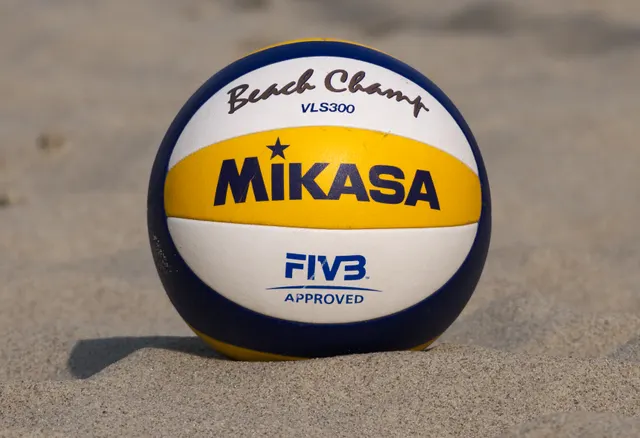
Mikasa BV550C
Competitive
Mid-range
Best for: serious beach players.
What stands out
The official FIVB beach ball since 2023
10 stitched panels with a dimpled surface
Built to absorb less water
Watch out for: too soft for indoor use.
Choose it if you play beach volleyball regularly and your group or competition uses this ball. Consider another ball if you mostly play indoors or only need one for casual games; for a first beach session, borrowing the group's ball shows you what everyone already uses. Pump it to the pressure printed on the ball and check with a gauge: beach balls are pumped much softer than indoor balls.
Video: McDuffie's Garage on YouTube. Learn Volley is not affiliated with this channel.
Molten V5B5000
Intermediate
Mid-range
Best for: a good-value competition beach ball.
What stands out
FIVB-approved, stitched, designed to absorb less water
Care and inflation
Pump to the pressure printed near the valve and check it with a gauge; squeezing isn't accurate.
Moisten the needle before inserting it, and push it in slowly and straight to protect the valve.
Wipe clean with a damp cloth. Dry a wet ball with a towel and let it air-dry away from heaters and direct sun. Don't leave balls in a hot car.
Rotate several balls in practice so one doesn't take all the wear.
Deep dive: leather, composite or rubber?
Genuine leather: classic soft touch after break-in. Indoor only; keep it dry.
Composite (microfiber synthetic): consistent from day one and easier to care for. Most current game balls are composite.
Soft PU or rubber recreational balls: cheap and tough, fine for parks, but they feel different from match balls.
How we choose and price tiers
We compare product specifications and, for products with an Amazon link, their Amazon rating and Amazon’s summary of customer reviews to help you choose equipment. We have not personally tested these products.
Last checked: October 2026. Models change every year or two, and older versions are often discounted and still good.
Price tiers compare models within this page: Budget = among the cheapest real volleyballs, Mid-range = typical school or club price, Premium = top-of-range models. Actual prices vary a lot by country and retailer. Level shows who a ball suits, from recreational to competitive.
How we choose: we compare makers' specs and the balls leagues actually use with independent reviews, such as the review videos on this page. No brand pays to be listed, and commissions don't decide which products we pick or their order.
Frequently asked questions
What volleyball is used at the Olympics?
Indoor Olympic and FIVB events use the Mikasa V200W; FIVB beach events use the Mikasa BV550C.