Beach wind: observe, adjust, re-test
A 15-minute observation task for two people and one ball, after a gentle warm-up.
Beach Volleyball · Beach rules and indoor differences
Your practice card
0:00–0:03 — Check and describe
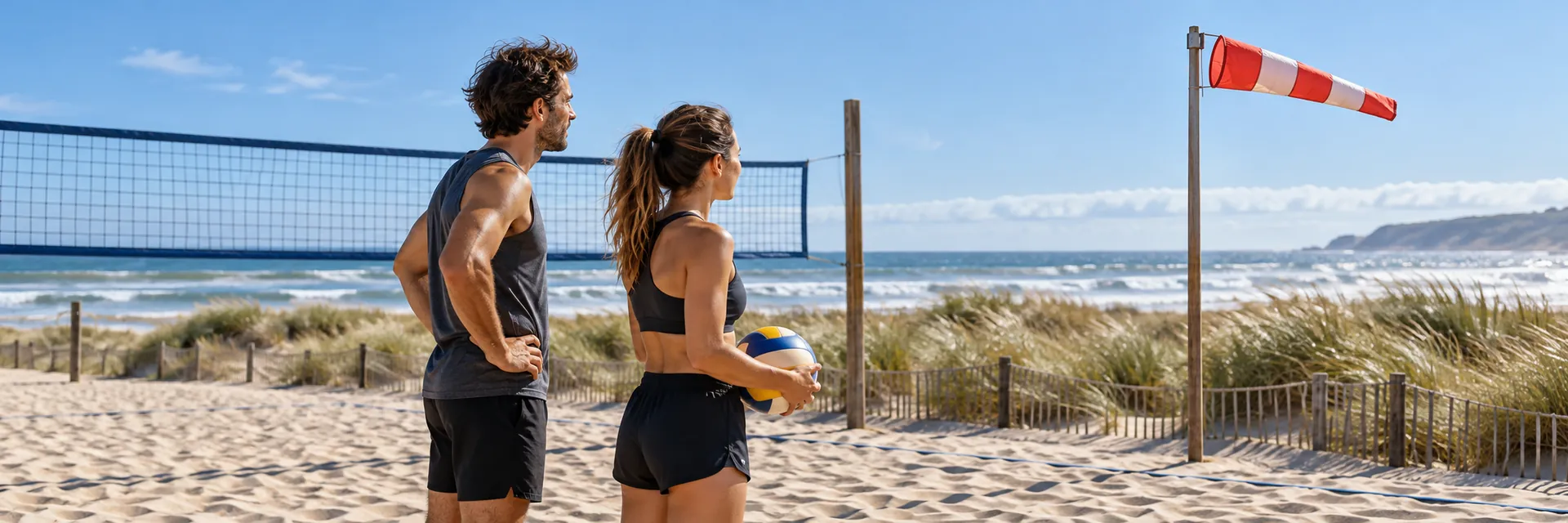
Use clear sand, one ball and a safe landing area away from other users. Look at an existing flag or windsock if available; describe the wind relative to your own playing direction: toward you, away, or across. No wind-speed estimate is needed.
Stop if conditions, visibility, loose objects or the net setup make practice unsafe. Do not throw sand to test direction. Use this instead of another practice block, not automatically on top of a full session.
0:03–0:06 — Five similar feeds
Mark a generous landing area with flat markers or footprints. A makes five gentle, similar tosses toward it from one starting spot. B watches from outside the landing area, then collects the ball after it lands. Record short, long, left or right from A’s viewpoint. Do not chase a drifting ball into another court.
0:06–0:09 — Change ends
Swap the throwing and observing roles and face the opposite direction. Keep the feed and intended target as similar as practical. Record five more tosses. Wind gusts, spin and differences in delivery can all affect the result: this does not isolate wind as the sole cause.
0:09–0:12 — Change one thing
Choose one small adjustment: a lower controlled feed, or a different starting position. Keep the other choices similar. Try five feeds and compare with your first notes. If the wind changes, write that down rather than calling the adjustment a success.
0:12–0:15 — Apply and decide
A now feeds gently to B, who forearm-passes back for A to catch. Swap after five. Notice whether early foot movement and a controlled platform help produce a reachable return. Easier: move closer and use a gentler feed. End with one adjustment to keep or undo.
Your observation record
Left and right are from the current thrower’s viewpoint. Labels can overlap: one ball may land short and left. Do not add the four counts into an accuracy percentage.
Date / people / safe location: ____________________
Wind relative to my direction / gusts noticed: ____________________
First five: short ____ long ____ left ____ right ____
Opposite direction, five: short ____ long ____ left ____ right ____
One change tested: ____________________
After change: ____________________ Next choice: ____________________
A short practice sample is not a forecast. Re-check conditions when they change; no serve, set or trajectory is guaranteed to behave the same way. Catches and tosses here are exercises, not legal rally contacts.
Take the card onto the sand
Free print-and-write PDF, with the session and blank observation record. No sign-up; not a fillable form.
Use the observation, not a fixed target
Read the flight you actually see. A flag is a clue to current direction, not a promise about the next ball: gusts, spin, height and your delivery can change the result. Do not label every miss as a wind problem.
For the next practice, keep a controlled feed or serve that you can repeat. Test an adjustment from both ends before increasing difficulty. This card does not prescribe always serving into the wind or one universal toss height.
Rules and coaching choices
FIVB Official Beach Volleyball Rules 2025–2028, rules 4.1.1 and 9.2.2: official teams have two players; deliberately catching and re-tossing is an exercise modification. The timetable, counting task and target sizes here are our coaching choices, not FIVB standards.
Official FIVB beach rulebook (English PDF)
The FIVB drill-book discusses observing wind and adapting ball control. Our observation card is an original simplified task, not a reproduction of a published drill or a guarantee about flight.
FIVB beach drill-book (coaching context, English PDF)
Rules checked 28 October 2026. No coach endorsement or observed training result is claimed.
Choose the next task
Two players, one ball: the full practice · Beach Volleyball
Questions about this practice
Should I always serve into the wind?
No universal recommendation follows from this exercise. Observe the current conditions and your own controllable serve, test from both directions and follow the competition’s rules. This card is an observation task, not a tactical guarantee.
How do I know the adjustment caused a better result?
A few balls cannot prove that. Keep the feed similar, record gusts and change one thing. If the conditions change or the result is inconsistent, repeat later or undo the change rather than declaring improvement.