
Common Volleyball Injuries and Prevention
Ankle sprains are the most common acute volleyball injury, usually from landing on another player's foot at the net, and finger injuries from setting and blocking, such as dislocations and tendon tears, are also common. Repeated jumping and hitting can cause overuse injuries such as jumper's knee and shoulder pain. A proper warm-up, good landing technique, strength and balance training, an ankle brace if you've sprained an ankle before, and enough rest all help prevent them.
- Most common acute injury
- Ankle sprain
- Also common
- Finger injuries (setting, blocking)
- Common overuse injuries
- Jumper's knee, shoulder pain
- Key prevention
- Landing on your own side, warm-up, landing technique, balance training
Health note: General information, not medical advice. Young athletes should train under a qualified coach, and anyone with pain or an injury should see a doctor or physical therapist.
Common volleyball injuries
Joint injuries are the largest single category of volleyball injuries. The most common is an ankle sprain. Finger injuries, such as dislocations and tendon tears from setting and blocking, are also common.
Volleyball also causes overuse injuries from repeated jumping and hitting. The most common are jumper's knee (pain just below the kneecap) and shoulder pain in hitters and servers. Pain that keeps coming back during or after play is a warning sign: cut back on jumping or hitting and get it checked.
Growing players
In children and young teens, pain and a tender bump just below the kneecap, or pain at the back of the heel, can come from an irritated growth plate (Osgood-Schlatter disease at the knee, Sever's disease at the heel) rather than a normal training injury. Both are most common during growth spurts in running and jumping sports. If it hurts, ease off jumping and have a doctor or physical therapist check it.
How to prevent volleyball injuries
- Land on your own side. Most volleyball ankle sprains happen at the net, usually when a player lands on another player's foot after a block or an attack. Jump up, not forward, and land on both feet with your knees bent. Balance training (for example, single-leg balance and hopping drills) helps too.
- Brace or tape after a sprain. If you've sprained an ankle before, a brace or tape lowers the risk of doing it again. See ankle braces.
- Learn to land, and warm up properly. Warm up before every practice and game: light cardio, then dynamic stretches and volleyball movements (approach jumps, arm swings, passing). See the warm-up guide. Injury-prevention programs that combine strength, plyometrics, balance and feedback on landing technique are recommended for young female athletes in jumping sports by the US National Athletic Trainers' Association (NATA), partly to lower the risk of ACL tears. See plyometrics for safe landings.
- Look after your hitting shoulder. Warm up your shoulder before you serve or hit, build shoulder and upper-back strength with strength training, and cut back on hitting and serving if the pain keeps coming back.
- Manage your jumping load. Practices and matches already include a lot of jumping. Mix up your training, and after a hard session, make the next one lighter.
- Protect your fingers. Good setting and blocking technique (hands up early, fingers spread) helps prevent jammed fingers.
- Wear the right gear: indoor volleyball shoes (see the men's and women's shoe guides) and knee pads.
- Rest, eat and drink enough. Your body gets stronger between workouts, not during them. Drink water before, during and after practice, and eat enough to fuel your training.
- Don't play through pain. Pain that keeps coming back is a signal to back off and get it checked. Playing through an injury can make it worse.
What to do if you get hurt
For a sprained ankle or jammed finger, stop playing. For the first couple of days, protect the joint, keep it raised, and use compression; ice can ease pain. Then start gentle movement as pain allows. Don't "tape and play" through a swollen or crooked finger; get it checked for a fracture or dislocation. Don't try to pop a dislocated finger back into place yourself: keep it still and get it checked.
When to see a doctor: See a doctor or physical therapist if you have severe pain or swelling, can't put weight on the joint, notice a deformed finger or joint, or have pain that lasts more than a few days. If a player hits their head or shows signs of a concussion (headache, dizziness, confusion), they must stop playing right away and not return that day. They should see a doctor and not go back to volleyball until a doctor or other qualified health care provider clears them, then return gradually, step by step. Call your local emergency number (911 in the US and Canada, 112 across the EU) for loss of consciousness, repeated vomiting or worsening symptoms.
Watch: common injuries, shoulder exercises and finger protection

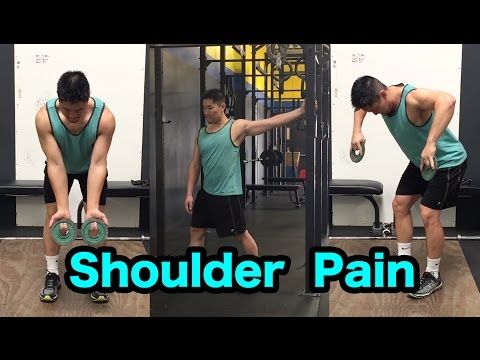

Videos: Hospital for Special Surgery, Elevate Yourself and Howcast on YouTube. Learn Volley is not affiliated with these channels.
Frequently asked questions
What is the most common volleyball injury?
The ankle sprain, usually from landing on another player's foot at the net. Finger injuries from setting and blocking are also common.
How can you prevent volleyball injuries?
Land on your own side of the net, wear a brace if you've sprained an ankle before, warm up properly, learn to land with soft knees in line with your toes, build leg and shoulder strength, and don't play through pain that keeps coming back.
When should you see a doctor for a volleyball injury?
See a doctor or physical therapist if you have severe pain or swelling, can't put weight on the joint, notice a deformed finger or joint, or have pain that lasts more than a few days. If a player hits their head or shows signs of a concussion (headache, dizziness, confusion), they must stop playing right away and not return that day. They should see a doctor and not go back to volleyball until a doctor or other qualified health care provider clears them, then return gradually, step by step. Call your local emergency number (911 in the US and Canada, 112 across the EU) for loss of consciousness, repeated vomiting or worsening symptoms.