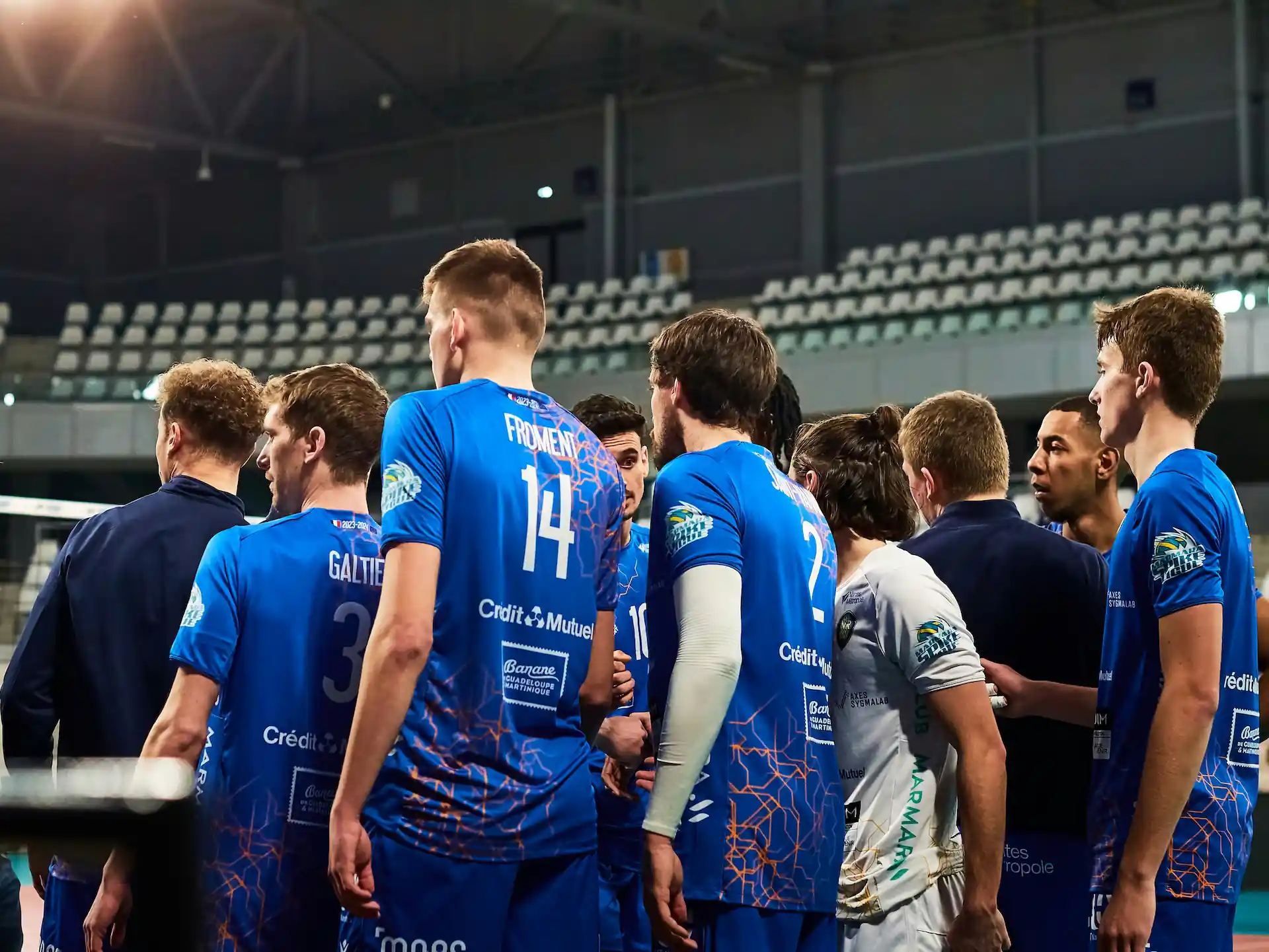
Playing Volleyball in College or University
Volleyball doesn't have to stop after high school. The best-known route is US college volleyball, where coaches recruit players (including many from outside the US) and some programs offer athletic scholarships. In most other countries, you join your university's team or student club after you enroll, often while still playing for a local club. This page explains both routes, and the guides below take you step by step through US college recruiting.
- Best-known recruiting route
- US college (NCAA, NAIA, NJCAA)
- International students
- Eligible for US college teams (same NCAA/NAIA rules)
- Outside the US
- Join your university team or club
- International events
- FISU World University Games
- Europe
- EUSA university championships
Two routes
- The US college route. US colleges recruit players during their teenage years, and offers can include athletic scholarships. It's open to US and international students, but it has its own timeline, eligibility rules and paperwork. Start one to three years before you'd enroll.
- University volleyball elsewhere. In most other countries, you choose a university for your studies and then join its volleyball team or student club. Many players also keep playing for their local club. Recruiting and sports scholarships are less common, though some universities offer sport-scholarship or “dual career” programs. Ask the university's sport office.
University volleyball outside the US
- UK: BUCS (British Universities & Colleges Sport) runs university volleyball leagues and championships.
- Canada: U SPORTS runs national university championships for women's and men's volleyball.
- Europe: EUSA (European University Sports Association) runs the European Universities Games and Championships, which include volleyball.
- Worldwide: FISU (the International University Sports Federation) holds volleyball at the World University Games.
- Most other countries have a national university sports body. Ask your university's sport office or your national volleyball federation.
US college volleyball
US college recruiting is how college coaches find, evaluate and offer roster spots to high-school-age players (about ages 14–18), including international players, and how players find the right school. You don't wait to be discovered: you take the first steps below yourself.
- First D1 coach calls & messages: June 15 after 10th grade (D2 coaches: any time). Every date is on the recruiting timeline.
- D1 roster limit (schools in the House settlement): 18 players
- NCAA D3 athletic scholarships: None
- D1 minimum core-course GPA: 2.3
- College levels: 5 (NCAA D1, D2, D3, NAIA, NJCAA)
Your first steps
- Make a list of 20–40 schools across more than one level.
- Register with the NCAA Eligibility Center (and the NAIA Eligibility Center if you're interested in NAIA schools).
- International students: also check the NCAA's international academic requirements for your country, and plan for English-language tests and visas as part of admission.
- Film games and build a short highlight video.
- Email coaches at schools that fit you, with your video, schedule and grades.
- Keep your core-course grades strong every semester.
You can do every one of these steps yourself. A paid recruiting service is optional; see Do you need a paid recruiting service?
How recruiting actually works
Recruiting is a two-way search. Coaches watch club and high school tournaments, look at video and read emails. You research schools, contact coaches, visit campuses and decide where you fit.
- You can reach out first, at any age. Players and parents can email, message or call college coaches whenever they like. The NCAA rules limit what coaches can do, and when.
- Coaches answer when the rules allow. Until the NCAA contact date above, a Division I coach may only send things like camp information and questionnaires. That's normal, not a sign they aren't interested.
- Video comes first. Most coaches see your highlight video before they ever see you play in person. A clear 3–5 minute video opens doors.
- Grades matter. Coaches need players who will be academically eligible and admitted. A strong GPA gives a coach more reasons to say yes.
- US club volleyball is the main stage for girls' recruiting. Many college coaches scout at US club tournaments in winter and spring. International players usually rely on video, national-team or league results, and email.
The five college levels
- NCAA Division I: The biggest athletic programs and the most athletic scholarship money. Very competitive; many players commit early.
- NCAA Division II: Strong volleyball with partial athletic scholarships. Often a great balance of playing time, academics and aid.
- NCAA Division III: The largest NCAA division by number of schools. No athletic scholarships, but many players get academic or need-based aid.
- NAIA: A separate association with its own rules and its own eligibility center. Offers athletic scholarships and has fewer limits on when coaches can contact you.
- NJCAA (junior college): Two-year colleges. A good route if you want more development time, need to raise your grades, or want to play right away and transfer later.
Men's volleyball is offered at far fewer schools than women's volleyball, so the map looks different. Many men's programs are in NCAA Division III, NAIA and a smaller group of NCAA Division I/II schools that share one national championship. Start your search wide.
Scholarship basics for 2026–27
Scholarships changed a lot after the House v. NCAA settlement took effect on July 1, 2025.
- NCAA Division I — schools in the settlement: Schools in the conferences named in the case, plus any Division I school that opts in, now use roster limits instead of scholarship caps. Women's indoor volleyball and men's volleyball are each capped at 18 players. The school may give a scholarship (full or partial) to anyone on that roster. That does not mean every school funds 18 full scholarships — each school decides its own budget.
- NCAA Division I — schools that don't opt in: They don't have to follow the 18-player roster limit, but they can't give more athletic aid than the old (2024–25) limits. All scholarships are now treated as “equivalency” awards, meaning they can be split into partial scholarships.
- NCAA Division II: Partial scholarship model. Coaches usually split their scholarship money among several players.
- NCAA Division III: No athletic scholarships. Ask about academic merit and need-based aid.
- NAIA and NJCAA: Both can offer athletic aid, but amounts vary by school and division. Ask each coach exactly what the offer covers.
- Renewals (NCAA D1 and D2): In most cases the head coach decides who gets a scholarship, how much and whether it's renewed. If a school plans to reduce, not renew or cancel your scholarship, it must give a valid NCAA reason, tell you in writing by July 1 before that school year and offer you an appeal.
Always ask: Is the offer full or partial? Is it for one year or several years? What does it cover (tuition and fees, food and housing, books), and what will you still pay? What happens if I get injured?
Deep dive: what “opting in” to the settlement means for you
Since July 1, 2025, Division I schools have had a choice. Schools that take part in the House settlement can pay athletes directly and can give scholarships to every player on the roster — but they must follow the 18-player roster limits described above. Schools that stay out keep the old scholarship limits and can't make direct payments. A school can opt in or out from year to year, so the rules at a school you're looking at today could change by the time you enroll. Ask each coach two simple questions: “Is your school participating in the settlement this year?” and “How many scholarships does your program actually fund?”
Step-by-step US recruiting guides
US College Volleyball Recruiting Timeline
What to do each year, from 8th grade to signing, with the NCAA contact and visit dates.
How to Make a Volleyball Highlight Video
Length, what to show first, skills by position and where to put the camera.
How to Email US College Volleyball Coaches
A simple email structure, a free template and when to follow up.
US College Eligibility: NCAA and NAIA
Eligibility Center accounts, core courses, GPA minimums and the rules for international students.
-
NCAA D1, D2, D3, NAIA and NJCAA
Each school decides its own scholarship budget, so ask every coach exactly what an offer covers.
Frequently asked questions
When can college coaches contact me?
It depends on the level. NCAA Division I coaches can start calling and texting June 15 after 10th grade (sophomore year), Division II coaches may contact you at any time, and NAIA and NJCAA coaches have far fewer timing limits. The US recruiting timeline lists every date.
Is junior college a step down?
Not necessarily. Junior college can give you playing time, development and a path to transfer to a four-year school.
Can international students play college volleyball in the US?
Yes. Many US college teams have international players. You need the same NCAA (or NAIA) eligibility certification as US students, based on your own country's school records, and you must be admitted to the college.
Can I play volleyball at a university outside the US?
Yes. Most universities have a volleyball team or club you can join after you enroll. National university bodies such as BUCS (UK) and U SPORTS (Canada) run championships, and EUSA and FISU hold international university events.