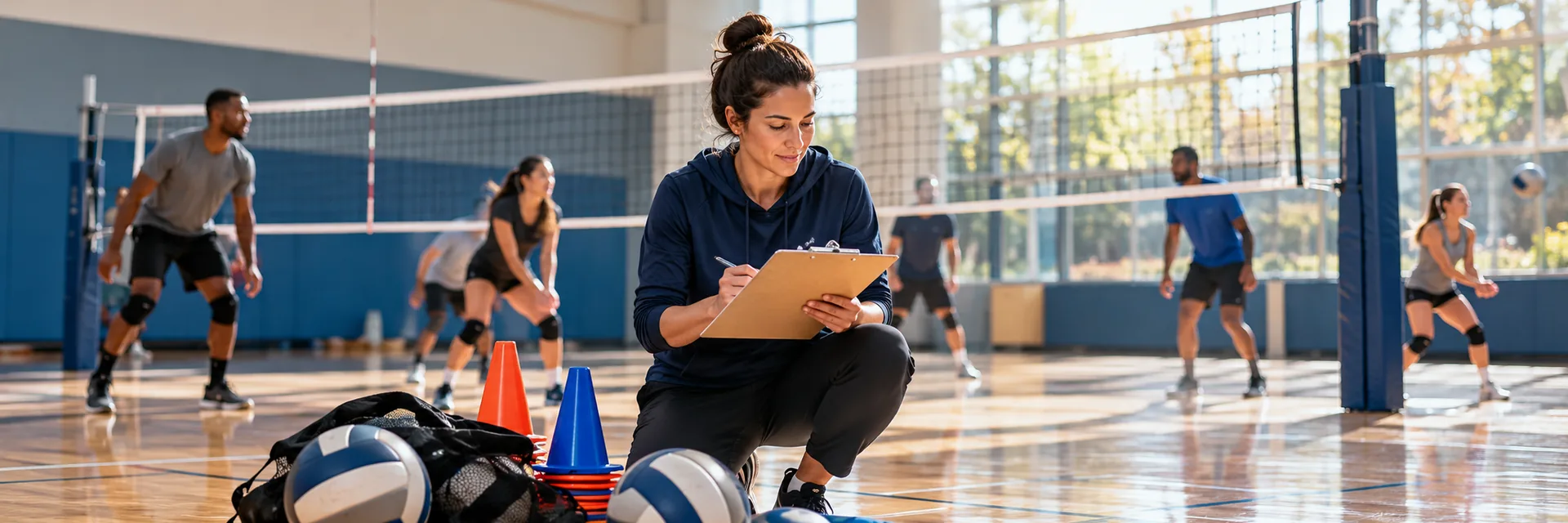
Build a session around one goal. Choose activities, include transitions and water, then adjust the time. No account is needed; your entries stay in this browser.
Your practice plan
Saving is optional and uses local storage (lv-practice-plan-v1). Nothing is sent to Learn Volley. On a shared device, avoid names or sensitive health notes and delete your saved copy afterwards. Exported files contain your notes; keep them private. Loading, importing or using the example replaces your open draft but does not overwrite the saved copy until you press Save.
The interactive planner needs JavaScript. Use the example below or a printable blank session plan instead. Printables
45-minute passing practice
Controlled passes a partner can catch without chasing
- Dynamic warm-up: 6 min
- Partner Passing: 10 min
- Water and changeover: 2 min
- Partner Setting: 10 min
- Keep It Up: 13 min
- Easy movement and review: 4 min
How to use your plan
Choose one observable goal
For example: out of 10 gentle feeds, count how many passes a partner can catch without chasing. Use the same feed and target next time. This is a coaching observation, not a grade or a team selection rule.
Include the whole session
Minutes include explanations, station changes and breaks. The example is for a group that can work safely in pairs with one ball per pair. Review each drill’s setup before choosing it; adding a drill here does not check your available court or equipment.
Adapt after you observe
Simplify the feed or allow a catch when rallies break down. Shorten high-impact work when movement quality drops, and stop for pain. Include school sport, matches and gym sessions when discussing the week with the player; the planner does not prescribe a medical workload limit.
Practical coaching and player resources
Use these 12 sessions as a sequence of choices, not a promise to master volleyball in six weeks. Repeat a task when needed, simplify it when control breaks down, and fit the work into the team's existing schedule.
Choose one question, record what you can actually see, and turn the pattern into a small practice task. Keep the observation definitions and the next check simple; a few match notes suggest a question, not a diagnosis.